
HR Focus in Start-ups to Succeed

Start-up companies can come in all forms and sizes. They seem to have high failure rates, but the minority who succeed can become large and influential.

It has been seen that most start-up founders more often have a casual or off-beat culture in their thinking, dress, office space, HR practices and Marketing, as compared to traditional corporations. Some of these casual approaches, such as the use of “flat” organizational structure, in which employees can directly communicate with the Founders or CEOs informally, are practiced to promote efficiency and to enthuse employees in the workplace.

Business Strategies for Finance, Marketing, Production, Product Development and Innovation are made without a robust HR and People strategy. The importance of this needs to be highlighted as this is one pillars of the foundation on which the businesses is built, and if this pillar is weak or not there the dangers will always loom. Having a HR and People plan is like a having Finance plan which is absolutely essential to a success of a start-up. If people are not the key focus area the start-up cannot succeed. The HRand People plan needs to be budgeted in the initial phase itself.

Hiring the right person is one of the biggest challenges for the start-up – it is not that getting people is a problem but getting the right-fit certainly is for most start-up organizations. Many a times compromises are likely to be made to get the organization moving quickly hoping that the incumbents will learn and adapt as we go along – something which a start-up needs to be careful about in my opinion.

All start-ups need people who are innovative, adaptable and flexible, analytical, emotionally intelligent, team players and have willingness to learn. They should be willing multi-taskers. Easily said than done – how do we find this out in an interview of an hour or two at the most?  The founder’s or CEO’s experience or gut-feel may not be sufficient to make those judgements. There is a professional way of doing thisby putting the person through professional Competency Assessment or Personality (Psychological) Tests.

As the organization matures and grows retention of good people becomes the challenge.Attracting,developing and retaining an amazing team are the hallmarks of success for any start-ups success. If there are right people they will design and redesign success strategies and fight for the organization’s success.

What HR policies should be there? How shouldthe elements of legality, predictability, fairness, equity and control be built into them require in-depth thought and insight as does the business plan. What has succeeded in one organization may not in another as each organization have a unique character and personality. Having policies is not good enough it is their proper implementation which is the tougher part and leads to dissatisfaction in most organizations over a period of time.

Just like business strategies and plans change the HR policies need to be revised and re-engineered keeping in view the business needs.

Making sure that the there is adequate focus on people besides other areas is most important in my opinion.

More Visit :- http://www.cengrow.com/

Employee Satisfaction Survey

Making Performance Management Work effectively

Managing Performance and keeping the workforce motivated is becoming increasingly complex and difficult particularly for the young brigade who is far more mobile and impulsive.
No system is perfect and permanent in any organisation. We need to continuously improve and adapt our processes to the changing environment.
Most organizations do have some form of Performance Management System as in recent times even Performance Appraisal is called the same. Firstly, let me clarify that Performance Appraisal is only one of the elements of the Performance Management System.
A robust Performance Management System (PMS) has 4 distinct sub-processes:
1. Formal Target Setting Process cascading down from the Annual Business Plan. It encompasses a participatory approach and is an open, transparent,data-based and an alignedprocess wherein the organization seeks to set challenging but realistic targets for all its employees.
2. Monitoring and Control involves an institutionalised and an on-going process for giving feedback, coaching and counselling to keepthe performance on track. This is the most important part of PMS and the organization needs to build the competence of its employees – it requires specialized training. This has invariably been a weakness in most organizations we have worked for in the last 30 years
3. The Performance Appraisal against the targets set in step 1 and any revisions thereafter. This requires the elements of subjectivity to be reduced and objectivity brought in. For this the appraisal form needs to be well designed. Self-appraisal often helps to bring acceptance and reasoning in the whole process. Appraiser and Reviewer both need to be data-based and objective to keep personal biases out.
4. A clearly defined Reward and Recognition Policy linked with thePerformance Appraisal contributes to building a motivated work-force. This needs constant review and updating year on year.
It is desirable to have the whole process fully documented with timelines with responsibilities clearly demarcated.
Other process such as Career and Succession Planning need to be in place for Performance Management to be more effective. Some Organizations do keep the two processes independent. However, the retention of talent has thrown a big challenge to many organizations as they grapple with balancing these processes.
More Visit :- http://www.cengrow.com/

Leverage Your Human Resources With Assessment Solutions

To retain the right employees and maximize their effectiveness in the business, you need to implement effective assessment resolutions. These are structured means of evaluating potential employees on a gamut of fundamental criteria. These ways can also be applied to subsisting employees too.

When used in the engaging and selection process, assessment solutions help you to pick the apt candidate for the role through the usage of a number of structured ways. Employing tested criteria ensures the people you hire are not only the suitable for the position in question but also decide whether they can match and thrive in your current company culture.

Hiring and Recruitment

When it arrives at employee selection and recruitment, many companies yet cling to the traditional methods of recruitment. These methods – interviews, resume critiques, background checks and so on – are still valid but are nowhere near enough to decide whether a candidate is fit not only to do the work you’re choosing them for but also whether they will fit into your organization and be engaged to its long-term success.

Contemporary assessment systems incorporate skills and abilities tests, behavioral and character evaluations, structured interviews assessments and simulations, cultural fit, job fit and career fit, practical job previews, administration evaluations and can hold custom-built assessments.

As for your existing employees, assessment systems comprising a range of tests, interviews, and simulations provide an ideal method to assess training and development needs. By correctly determining these needs, you’ll be in the perfect position to formulate a training program that improves your employees and thus your complete organization.

Examples are assessment centers and simulations. These enable you to evaluate performance levels and development changes for current employees as well as candidates. These contain a wide range of stimulating and practical activities providing presentation and role playing exercises, written analysis applications and workflow simulation exercises.

Performance Indicators

These allow you to foretell how well your employees will be involved in their work and if they are likely to stick with your organization.

Assessment solutions can also help with another problem that some firms face, that of employee retention. Employees leave organizations for many reasons, but job dissatisfaction is high on the list. Job dissatisfaction can result from many factors including not fitting in with organizational culture to feeling undervalued or in the wrong role.

Employee retention

Proper assessment can improve employee retention in many ways. For one thing, it can work in the hiring process by making sure that the candidate is someone right for the position s/he’s applying for and also right for your company culture. The modern assessment covers such factors as cultural fit, job fit and career fit, to make sure your new employee is with you for the long term.

Ongoing assessment can ensure employee satisfaction by making sure an employee’s talent is recognized and put to its best use.

Cengrow is one among global leaders in management consulting firms and has transformed businesses in all sectors and regions in India and across the planet. They have partnered with a range of clients to develop need based assessment solutions for employees at reasonable costs.

Visit www.cengrow.com for more.

Know When To Get Help – Performance Management Consulting

Most people fear performance appraisals since it is tiring and tedious, and people think their jobs may be on the line. Of course, performance evaluations are pretty useful since management can completely make sense out of the questions that have been occurring in the company. By a regular performance appraisal of workers, companies can be able to find out about the motives behind why the organization is wasting money.

  1. Perform Appraisals in an Organized Manner

As the part of the administration that ultimately runs the company, the superiors who are making all that performance evaluations year after year, they must take this task sincerely so that that the firm will be able to benefit from the yearly performance appraisals of the employees greatly. In the event in which people who are going to head these yearly employee performance evaluations are clueless on what they should do, they usually have the option to get some performance management consulting. Hence, they will able to know what people from the management like them should do when it’s time to make those employee performance appraisals once again.

Employee performance evaluation may appear to be a highly difficult task but through great performance management advisors, you are sure to be able to get the plans as well as the methods that other organizations are doing with the help of performance management consulting. When it comes to performance management consulting, experts in the field of business administration will instruct company heads that before they go on to their employees’ performance appraisal meetings. Whether they will give out a presentation to other business heads or just be talking to the employees, a performance management consulting will provide advice the management to make a draft of what they are going to state first before actually going out to the meeting and fumbling on the employee appraisal meeting.

  1. Focus on positive, not negative aspects

When it comes to performance management consulting, it is extremely suggested that you plan everything out from the beginning so that the whole process of the yearly employee performance appraisal will go on evenly and without any hitch. The performance administration consulting activity should be able to help out the company’s management to be able to provide clear and concise ways for them to make their thoughts be fully understood during the performance appraisal report. Performance planning is the key to a well-executed performance appraisal meeting according to the performance management consulting.

– Heed the advice of the performance management consulting group

– Decide on the important factors

– Tackle those factors

  1. Make it work!

Based on research from the performance management consulting, top companies today are using the performance management process to reduce a best-effort directed culture in the enterprise. Instead, the company should move on towards a results-driven culture instead, the next is to be able to establish as well as strengthen the extreme importance of the company’s core competencies and ultimately, the company must also be able to point the poor performers in the company for the finish.

Cengrow is a leading performance management consulting firm that provides all above-mentioned benefits to their clients at a very affordable rate. Contact them to experience a decent consultation for your company’s growth.


Advantages of 360-Degree Feedback to Improve Employee Performance

360-degree feedback allows you in receiving the helpful development advice from required multiple sources, and the sources are none other than an employee’s work circle, which includes colleagues, direct reports, and line managers. In most of the cases, 360-degree feedback involves a self- evaluation and some parties prefer to include external parties like suppliers and clients. But such isn’t the scenario always. The 360-degree assessment process is carried out by a team to provide help to each person to improve and progress, and it is all about spotting strengths and weaknesses which are used to plan their personal growth and some specific paths for development.

Cengrows is here to throw the light on the advantages of 360 degrees feedback system, which allows the team to progress. It is a collaborative process which eliminates certain issues that arise when only the managers act instead of allowing the people also to perform with their team.

Following are the advantages to improve the performance:

  • Accountability and self- awareness: self-awareness is possible due to feedback only which helps you to be better and enhance your performance. People’s motivation comes from knowing that their works are being well- acknowledged and this helps in being them more responsible towards work.
  • Peer group: as a manager, you might have the different view about the employee, whereas, on the contradictory, peers will have a different perspective altogether, as they are more aware of the working styles, the way of interaction and the way they are utilizing their time. This is the reason why 360-degree feedback works and always welcomes the input that managers may lack to provide. It happens many times, you might work with people from the different team or department on the same project, and your manager might not be aware of the know- how’s of the task and the work involved. According to recent research, peer relationship has an enormous impact on the work lives on individuals. All these things directly contribute to the working environment of the office.
  • 360 feedback and managers: this feedback also assists the managerial performance which involves receiving both- the constructive as well as positive feedback from your team members. This also encourages the employees to come up with upward feedback on the issues which might have been underground over the period. This is a unique opportunity to expand new insight into your working style and also the way you interact with your team.

Hence, it was found that 360-degree feedback is obliging in the overall development of members and has been found quite beneficial and also, has shown improvement in the task. So all those, who haven’t yet tried it must implement in their company to have the excellent result, as this feedback helps to create more communicative,  continually developing and high- achieving team.


How to Use Psychometric Testing in Hiring

According to a survey conducted by the Society for Human Resource Management, approximately 18% of the companies these days are using personality tests in the recruitment procedure, and surprisingly, this number is growing at the rate of 10-15% on an annual basis- as per many industrial and organizational psychologists and the Association of Test Publishers.

Psychometric testing proves that there are certain cognitive and personality tests which help the new employees to succeed in their field and boost them for their future. Since the cost of a bad hire is extensively estimated to be a year’s salary; there are huge incentives for organizations to get hiring right. Due to lack of knowledge, unfortunately, many organizations use the wrong psychometric assessments in a wrong way and here are the followings they ought to know to minimize the potential risks and maximize their predictive accuracy, as Cengrows is helping you to achieve:

  • Know the law: the organization ought to keep in mind, the legal compliance when they want to add psychometric tests to their pre-employment screening system. The assessment tools, especially cognitive ability tests need to be job- relevant due to the presence of anti- discrimination laws. Competency mapping is included too for psychomotor testing.
  • Business needs should be known: these tests won’t help you unless you don’t have well- established measures of job performance. These days, organizations are focusing more on the predictors or independent variables rather than concentrating on dependent variables. It is important to know that if an industry doesn’t have quantitative measures of employee performance on the job, then there is no source for statistical correlations of how good these tests predict their performance. In such a case, you need to be dependent on the assessment center.
  • Risk of cheating is reduced: the tests like cognitive ability tests are conducted in order to safeguard the candidate; organizations should ‘proctor’ the assessment test, either by monitoring him via video conference, or noting their activities directly. But keep in mind that some candidates may be tempted to play a smart act with the result. You must compare the reference of the candidate and his interview ratings with their results to ensure whether the two are consistent or not. Such things are useful in the sales department where to need to have a smart candidate and you can be easily fooled by people by ‘impression management’. Using multiple psychometric tests can actually help the organizations to get a more consistent picture. You have to perform such tests in limit and never try to over-do it because sometimes, even a well-developed, predictive assessment battery and legally defensible won’t be of any worth if the candidate feels it being over time-consuming.
  • Must share the results with the candidates: every candidate has the right to see their effect these days- as per “informed consent” and few organizations also provide access to the reports based on the psychometric tests that the applicants take. Whether the candidate accepts the employment offer or not, there are both- the ethical as well as the pragmatic benefits of sharing the result.
  • Test the tests: job performance of an individual must be evaluated quantitatively, which give the company criteria for correctness. While hiring managers and HR, one must consume the right methodology to select and retain the authentic psychometric tests.

To undergo all these points as mentioned earlier, one ought to know and understand the business needs and make sure that you find a test that evaluates the characteristics. Some laws prohibit the company from discriminating the privacy of the candidate, but no legislation prohibits the company from using strange assessment tools.

To know more visit: Cengrow

Feedback Recipient Perspective

360-degree feedback system… For many of you, it may be a new term. 360-degree feedback is a system where the feedback recipient’s direct reports, supervisors and colleagues- all collectively complete a survey and their task is to rate the recipient’s behavior and his skill at working place or work. Here, the feedback is converted into a report. Here, we will discuss an individual’s experience in each phase, and particular attention is paid to how HR makes sure that his participation is fruitful. To explain you in a better way, Cengrows is here to guide you about the same.

360-degree feedback

From being on the fronts to the top notches, the feedback recipient can have any role in the organization. The actual 360 process is same for a CEO as well as an entry level feedback. You will be able to understand this concept even more clearly with an apt example. Let’s say- A person named Mr. X: the feedback recipient. He has peers, direct reports and a supervisor who are providing him with feedback. Mr. X gets started with the process when he comes across about it in a meeting, mail or workshop. 360’s being familiar enough, he is more interested to know and learn that how his company will conduct it, for which he is supposed to know the following:

  • Who will all be undoing the same process?
  • What about a selection of rates?
  • How much specific will it be, like about rating?
  • Will he come across criticism?
  • Who will view the report?
  • Is this for professional development, also known as 360-degree Evaluation?
  • Will his promotion, impression or salary be affected by the same?
  • Who will manage his reports?

Now it is up to Mr. X to look upon, which side of the grass is greener- whether to take 360 as a useful tool for development or a threat. Of course, this can make a huge difference, especially when he is the only one along with HR to view his report, then he will be quite relaxed and will feel efficient as well.

When you talk about rating in 360’s, it will be on the scale of 5 points. Every minute pint like speaking with credibility, development, behavior, knowledge- all will be rated carefully and will be unbiased. Though Mr. X has to undergo the variety of challenges, he can receive help from his HR.

All you require is an adequate follow-up support to boost 360-degree feedback from observation to transformation- both- for Mr. X and his team. The main aim is to frame 360 in a way that is beneficial for Human Resource as well as the company, along with the employee.

Psychomotor Testing: Efficient Operational performance

Psychomotor Testing is a unique yet an important element of the hiring process in companies. Covering a full range of job-specific aptitudes, cognitive ability and personality tests, this test offers a comprehensive solution to hire and manage the right employee and accurately predict performance metric for specific roles.

a5
Why is it Important?

Psychometric tests cover a mix of ability and aptitude tests that includes a specific questionnaire on competency mapping to help deliver a clear and concise insight into the candidate’s talent, attitude and attributes. It highlights the key performance areas of the employee and helps companies to understand the behaviour and psychic of an individual. Interviewers can get a first-hand insight on employee by assessing the logical reasoning abilities of an individual and how one responds to changing situations or challenges that sprout in a working environment.

Benefits of Psychomotor Testing

Conducting Psychomotor Testing not only benefits an organisation in assessing and hiring the right candidates but also helps in improving the organisations internal workforce.

Most of the Psychomotor Testing are prepared with multiple-choice questions and timed. Unlike other tests, these tests do not have a right or wrong answer but focuses on the candidates/employee’s personality and general outlook. Moreover, these tests can be conducted offline and can also be integrated and automated online, making them easy to use and convenient for all kinds of companies.

It is important for organisations today to focus on evaluating performance and growth potential of its employees and most of the companies are adapting and preparing psychometric tools including a questionnaire on competency mapping that helps employers introspect and enhance their workforce and gauge the right talent. Cengrow, a global consulting firm designs and conducts performance management tests along with a range of assessment solutions including psychometric testing, competency mapping and other tools that help businesses lead and perform better.

These kinds of questionnaires offer role clarity and make the selection process simpler and much more effective than the traditional hiring method of just interviewing the candidates.

Organisations following competency mapping have benefitted immensely by getting a chance to identify potential employees, analysing the person’s core strengths, key competencies and how one reflects in a demanding work atmosphere. Additionally, competency mapping provides an insight on a person’s work style and specific skills that may be suitable of the open or higher position in and within the organisation. By giving a fair insight of the employee, the employers can effectively map the right person to the specific job and help him perform better or move up with the roles fitting his personality.

In short, competency mapping helps identify qualifies individuals, assesses performance of the existing workforce and focuses on enhancing productivity of the organisations objectives and reach its overall objective for a successful growth.

It is time to select and develop your organisations human asset by choosing an experienced business consulting firm like Cengrow that offers tailor-made solutions like competency mapping assessments and psychomotor testing to help you hire the right talent. It is time to adapt new tools and methodologies that enhance your organisation’s goal setting, performance appraisals and employee’s career planning in a better more improved way.

Competency Assessment – Key to Better Hiring

One of the most challenging tasks for the human resources – HR team in any organisation is to search, find and choose the right talent. Competence at work is crucial for projects productivity and in the overall growth of an organisation. When it comes to recognizing employee competencies, most organisations fail to recognise and utilise their true talent and skills. This is the reason so many organisations today conduct competency assessments or ask employees to undertake a competency mapping questionnaire that help them effectively hire and manage their workforce.

a4

Competency Assessment – Placing Right People in The Right Jobs

Competency assessment is a process that has been designed to measure and assess an individuals or a group’s performance consistently in relation to the business requirements of the organisations they are enrolling or applying for. The process includes a competency mapping questionnaire that the employee answers and helps organisations understand and identify key attributes and skills that the person has in order to fulfil his job roles & responsibilities. In fact the employee too will be happy to be fit for the job he is assigned to and that shall help him build a positive relationship with co-workers, seniors and coordinated better internally.

Psychomotor testing not only helps gauge a person’s performance effectiveness but also his ability to process and follow instructions and react to situations succinctly.

Vital Requirement for All Organisations

Competency assessment is vital to all organisations big or small, new or old as it assists in hiring the right talent. It can also help organization in a variety of other tools and measures including a 360 degree feedback that helps in job promotions, internal assessments etc.

Every company needs to implement competency mapping assessment and make it an essential exercise. It will enhance the performance of each role and will help improve training and development procedures and in turn improve functional and technical competencies of the workforce.

The business environment is constantly changing and with a dynamic business it is imperative for the human resources to implement the right competency mapping and truly evolve talent management, development and overall employee appraisal format.

In recent times, global competition defines an organisation’s growth and business strategies need to be implemented for efficient workforce. Technology presents new solutions and with new tools and applications being launched constantly, customised assessment solutions including psychometric tests, competency mapping and other career-based approaches have enhanced human resource’s management and have proven positive in enhancing the organisations productivity and overall growth. So if your organisation is in need to match the right talent with the right jobs, get in touch with a business consulting firm like Cengrow, a respected and recognised international consulting firm that specializes in designing, preparing and conducting competency assessments, psychomotor tools, Critical Reasoning Test and psychometric testing for leadership and many other proven methodology and tolls for organisations and sectors located globally.

360-degree feedback Helping People Grow And Developing Better Employees

we-provide-best-possible-management-consultancy-services-and-keep-our-clients-happy-cengrow

People need feedback to develop and improve and a 360 degree feedback helps companies understand employees better to foster collaboration and improve productivity within the organisation.

Helping People Grow

Most organisations that focus on employee engagement and development use the 360 degree feedback tool to assess their potential and enable them to perform better with valuable feedback. It enables employees to create a career roadmap for themselves and make the right professional decisions too. It helps people grow their strengths and work towards their weaknesses to make them become better.

Exchanges Ideas for Improvements and Performance

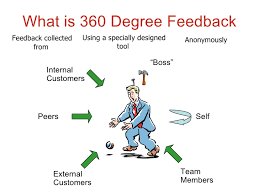
A 360 degree feedback creates an open exchange of ideas for improvement and provides leaders with the right set of information on their employees that can help them become more effective in how they perform. Usually used for employees at middle and senior level, this method uses multiple questions that assist each employee an opportunity to receive performance feedback and uses appreciative inquiry from his or her supervisors, peers, staff members, co-workers and sometimes from customers too.

Besides sharing a meaningful assessment and assisting in making administrative decisions such as a pay appraisal or a promotion, a 360 feedback system is also a perfect way to bring together people without blaming anyone or naming anyone and work towards concluding organisations key highlighted objectives. A 360 degree performance appraisal has four integral components:

  • A Self Appraisal
  • Superior’s Appraisal
  • Subordinate’s Appraisal
  • Peer Appraisal

Offering a comprehensive view towards employee’s performance, a 360 degree appraisal is a powerful tool that tracks changes in other’s perceptions about each other and hence recommended to be adapted on a regular interval at an organisation. Not only does it help assess their leadership skills but will also let them understand their management styles. With a focus on teamwork, character and leadership effectiveness, a 360 degree feedback program also addresses skills including listening, planning and goal-setting.

Numerous methods including a 360 degree survey, quality reports and even a 360 degree performance appraisal tool can help companies a secure and comprehensive way to understand and help people reach their potential.

Experienced and accredited consultants like Cengrow understands the importance of knowing your employees for better productivity and provides integrated solutions for all kinds of assessment and psychometric testing requirements that help organisations understand their people better. They offer organisations a fully customized 360 degree feedback solution which is a comprehensive web service for groups or projects of all sizes and is easy & flexible to use, strictly confidential and quite cost effective. In fact Cengrow is also the only agency in India that deploys psychomotor tests for manufacturing and service set-ups.