
HR Focus in Start-ups to Succeed

Start-up companies can come in all forms and sizes. They seem to have high failure rates, but the minority who succeed can become large and influential.

It has been seen that most start-up founders more often have a casual or off-beat culture in their thinking, dress, office space, HR practices and Marketing, as compared to traditional corporations. Some of these casual approaches, such as the use of “flat” organizational structure, in which employees can directly communicate with the Founders or CEOs informally, are practiced to promote efficiency and to enthuse employees in the workplace.

Business Strategies for Finance, Marketing, Production, Product Development and Innovation are made without a robust HR and People strategy. The importance of this needs to be highlighted as this is one pillars of the foundation on which the businesses is built, and if this pillar is weak or not there the dangers will always loom. Having a HR and People plan is like a having Finance plan which is absolutely essential to a success of a start-up. If people are not the key focus area the start-up cannot succeed. The HRand People plan needs to be budgeted in the initial phase itself.

Hiring the right person is one of the biggest challenges for the start-up – it is not that getting people is a problem but getting the right-fit certainly is for most start-up organizations. Many a times compromises are likely to be made to get the organization moving quickly hoping that the incumbents will learn and adapt as we go along – something which a start-up needs to be careful about in my opinion.

All start-ups need people who are innovative, adaptable and flexible, analytical, emotionally intelligent, team players and have willingness to learn. They should be willing multi-taskers. Easily said than done – how do we find this out in an interview of an hour or two at the most?  The founder’s or CEO’s experience or gut-feel may not be sufficient to make those judgements. There is a professional way of doing thisby putting the person through professional Competency Assessment or Personality (Psychological) Tests.

As the organization matures and grows retention of good people becomes the challenge.Attracting,developing and retaining an amazing team are the hallmarks of success for any start-ups success. If there are right people they will design and redesign success strategies and fight for the organization’s success.

What HR policies should be there? How shouldthe elements of legality, predictability, fairness, equity and control be built into them require in-depth thought and insight as does the business plan. What has succeeded in one organization may not in another as each organization have a unique character and personality. Having policies is not good enough it is their proper implementation which is the tougher part and leads to dissatisfaction in most organizations over a period of time.

Just like business strategies and plans change the HR policies need to be revised and re-engineered keeping in view the business needs.

Making sure that the there is adequate focus on people besides other areas is most important in my opinion.

More Visit :- http://www.cengrow.com/

Employee Satisfaction Survey

Making Performance Management Work effectively

Managing Performance and keeping the workforce motivated is becoming increasingly complex and difficult particularly for the young brigade who is far more mobile and impulsive.
No system is perfect and permanent in any organisation. We need to continuously improve and adapt our processes to the changing environment.
Most organizations do have some form of Performance Management System as in recent times even Performance Appraisal is called the same. Firstly, let me clarify that Performance Appraisal is only one of the elements of the Performance Management System.
A robust Performance Management System (PMS) has 4 distinct sub-processes:
1. Formal Target Setting Process cascading down from the Annual Business Plan. It encompasses a participatory approach and is an open, transparent,data-based and an alignedprocess wherein the organization seeks to set challenging but realistic targets for all its employees.
2. Monitoring and Control involves an institutionalised and an on-going process for giving feedback, coaching and counselling to keepthe performance on track. This is the most important part of PMS and the organization needs to build the competence of its employees – it requires specialized training. This has invariably been a weakness in most organizations we have worked for in the last 30 years
3. The Performance Appraisal against the targets set in step 1 and any revisions thereafter. This requires the elements of subjectivity to be reduced and objectivity brought in. For this the appraisal form needs to be well designed. Self-appraisal often helps to bring acceptance and reasoning in the whole process. Appraiser and Reviewer both need to be data-based and objective to keep personal biases out.
4. A clearly defined Reward and Recognition Policy linked with thePerformance Appraisal contributes to building a motivated work-force. This needs constant review and updating year on year.
It is desirable to have the whole process fully documented with timelines with responsibilities clearly demarcated.
Other process such as Career and Succession Planning need to be in place for Performance Management to be more effective. Some Organizations do keep the two processes independent. However, the retention of talent has thrown a big challenge to many organizations as they grapple with balancing these processes.
More Visit :- http://www.cengrow.com/
The Fundamentals of Business Process Re-Engineering

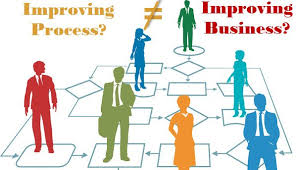
Nowadays, some companies implement Process Re-engineering to attain quick savings and achieve the short term profits they have always wanted to make. Thinking good about this progress, they go to another ambition only to find that soon they are confronted with many of the same difficulties they believed they had cleared up. Now they are challenged with re-engaging the staff, incurring additional costs, to fix issues that may directly have been identified and dealt with without the loss of customer satisfaction had they originally planned for continuous growth.

Business Process Re-engineering simplified

Business Process Re-engineering (BPR) is a complete process demanding a change in the primary way business processes are done. BPR recognizes unnecessary or repetitive activities and reduces them. Wherever feasible, it takes standard procedures and automates them. To achieve, it needs you to have a thoroughgoing and complete agreement of existing processes. Using this in-depth information allows for an examination of how well to make each piece of the method more efficiently, while always focusing on customer comfort.

What is needed to succeed?

To achieve BPR, traditional thinking and management functions must give way to empowered leadership and think “outside the box.” The exchange of information at all levels throughout the organization is essential. It begins with implementing goals and objectives for each process, defining roles and detailing shared strategies. This step is necessary to the success of a BPR action. Management must discharge departmental mandates, spare the work from the departmental accounts and remove strict operational control. These are anti-productive to BPR initiatives.

The next step is empowerment, allowing employees to have a say on how the business will work efficiently. To make sure that this happens, senior management must agree to commit to several things. The most important commitment: providing and supporting the impetus for the initiative. Once started, they can’t look back, this will likely be the most difficult obstacle management will encounter. Employees must see and understand that management supports employee participation and agree changes must be made. Management can’t disregard suggestions; even those they feel are frivolous and must provide positive feedback to encourage continued participation and success.

Next, management should realize that there will be time commitments involved both for themselves and for the staff. They must be willing to share some of their time with the staff doing the process investigation and mapping, for not only are the daily functions of the business examined and mapped but the management services as well. If there is a commitment to enhancing the overall functionality of the business, then no area can be left unmapped.

Many tasks are involved in Business Change. The first step towards success is planning and empowerment. The balance of tasks involved in a successful BPR implementation requires a fair amount of strategic thought and planning. Positive attitude, process thinking, avoiding the temptation of quick savings by eliminating staff, and being concentrated and on task, are the heart of the process and can be difficult. Remember, these are essential qualities in a productive transformation of the company.

How to Use Psychometric Testing in Hiring

According to a survey conducted by the Society for Human Resource Management, approximately 18% of the companies these days are using personality tests in the recruitment procedure, and surprisingly, this number is growing at the rate of 10-15% on an annual basis- as per many industrial and organizational psychologists and the Association of Test Publishers.

Psychometric testing proves that there are certain cognitive and personality tests which help the new employees to succeed in their field and boost them for their future. Since the cost of a bad hire is extensively estimated to be a year’s salary; there are huge incentives for organizations to get hiring right. Due to lack of knowledge, unfortunately, many organizations use the wrong psychometric assessments in a wrong way and here are the followings they ought to know to minimize the potential risks and maximize their predictive accuracy, as Cengrows is helping you to achieve:

  • Know the law: the organization ought to keep in mind, the legal compliance when they want to add psychometric tests to their pre-employment screening system. The assessment tools, especially cognitive ability tests need to be job- relevant due to the presence of anti- discrimination laws. Competency mapping is included too for psychomotor testing.
  • Business needs should be known: these tests won’t help you unless you don’t have well- established measures of job performance. These days, organizations are focusing more on the predictors or independent variables rather than concentrating on dependent variables. It is important to know that if an industry doesn’t have quantitative measures of employee performance on the job, then there is no source for statistical correlations of how good these tests predict their performance. In such a case, you need to be dependent on the assessment center.
  • Risk of cheating is reduced: the tests like cognitive ability tests are conducted in order to safeguard the candidate; organizations should ‘proctor’ the assessment test, either by monitoring him via video conference, or noting their activities directly. But keep in mind that some candidates may be tempted to play a smart act with the result. You must compare the reference of the candidate and his interview ratings with their results to ensure whether the two are consistent or not. Such things are useful in the sales department where to need to have a smart candidate and you can be easily fooled by people by ‘impression management’. Using multiple psychometric tests can actually help the organizations to get a more consistent picture. You have to perform such tests in limit and never try to over-do it because sometimes, even a well-developed, predictive assessment battery and legally defensible won’t be of any worth if the candidate feels it being over time-consuming.
  • Must share the results with the candidates: every candidate has the right to see their effect these days- as per “informed consent” and few organizations also provide access to the reports based on the psychometric tests that the applicants take. Whether the candidate accepts the employment offer or not, there are both- the ethical as well as the pragmatic benefits of sharing the result.
  • Test the tests: job performance of an individual must be evaluated quantitatively, which give the company criteria for correctness. While hiring managers and HR, one must consume the right methodology to select and retain the authentic psychometric tests.

To undergo all these points as mentioned earlier, one ought to know and understand the business needs and make sure that you find a test that evaluates the characteristics. Some laws prohibit the company from discriminating the privacy of the candidate, but no legislation prohibits the company from using strange assessment tools.

To know more visit: Cengrow

Corporate management training: The gateway to Success

A company to flourish in success must not only have a strategic vision but also a firm operating framework. Its workers are its lifeblood, they should be able to work smoothly and moreover be happy in their lines if the company is to grow. Here is when corporate management training kicks in serving to optimize working conditions for enterprises. After being nourished in college for individual success, workplace calls for a collaborative approach to corporate success where every person contributes to the progress of the organization. One needs to be a team player, cooperative in all circumstances to become an optimal employee.

Corporate management training

But what makes corporate management programs so alluring?

Corporate management programs include training in leadership, team building, and communication. An active employee knows how to communicate with his team efficiently. Managers should also be trained to get along with the consumer supplies and other trades with a decent communication command. If a company is to function at its highest, one of the best corporate management programs should be carried out regularly. Corporate management programs also tell you ways to implement cultures like employee fitness centers, cafeterias, ideal office space, parking and stuff. So it becomes mandatory to employ these things if you want to keep your employees happy.

Good corporate management programs will take all those new to the place, management, and teamwork and teach them slowly to thrive by their business. They will ultimately make your workers more than they could be to the ideal employees, enthusiastic team players, people who know how to lead, maintain healthy relationships with the workers, and offer incentives to stimulate growth in each aspect of the company. The result of these management programs will mark an improvement in team functioning, as well as the effectiveness of team members who then become mature players. Some activities are carried out for the purpose of improving the efficiency of the team like extra-curricular events, festive celebrations, etc. It is all about creating a team spirit in a group of people who work for one another to achieve their goals. Some of the benefits of these to highlight can be:

  • It reduces conflicts between team members
  • Increases awareness of each individual’s worth and usefulness
  • Encourages bonding and binding of the team for the common good

When the leaders understand the purpose of team building activities and know how to deliver them expertly, the team will benefit considerably from the exercise and consequently, the company will too. At Cengrow you will have access to very affordable, thorough, and concise corporate management programs that fulfill each and every criterion mentioned above. We go above and beyond the call to improve your business and provide each and every service you need to take your business to the next higher level. We show you how to manage data and charts to know the well-being and the performance of your employees and work on their gray areas. We are here for your all business errands, and we will always be!

To know more visit: Cengrow

Employment Engagement: Powerful & Insightful Way of Assessment

considerations-before-promoting-or-rec-ruiting-a-person-in-your-organizations-cengrow1Business performance is driven by its employees and its clients. Organisations are now focusing on enhancing employee engagement and attracting employees that are committed. Businesses look out for employees that can achieve the organisation objectives and also initiate their own personal growth within the organisation.

Organisations are now aware on the importance of employee engagement and are conducting engagement surveys and implementing E-Assessment solutions that help improve employee motivation, retention and spurs up key business outcomes in a short span of time. With the emergence and innovation of new technologies, there are numerous tools for measuring and improving employment engagement including happiness surveys, feedback tools, E-assessment solutions and capability enhancement tools.

How Employee Engagement Impacts Performance Management:

Continuous employee survey and e-assessment surveys need to be conducted over the year. Engaging employees will provide organisation insight into their role clarity and translate goals into day-to-day key work areas. It will help align employees to work and perform better and influence their capabilities and interests. The informal feedback would also improve performance management and build positive networking.

Times spend on one-on-meetings, ad-hoc meetings and other events also increases engagement. It also creates a positive impact in enhancing a healthy communication between leaderships and gives employees an exposure to colleagues that are positioned on their top. Remember, the managers need to spend more time with their tram members in order to create connected teams and increase engagement. It is a conscious effort, that happens over time and helps build better stronger teams.

Businesses need relevant and feasible strategy that accelerates and meets competitive challenges and enhance employee engagement for a motivated and self-driven performance every time. Understanding and knowing what employees think and feel needs to be valued. It also increases the employee’s collaboration with clients and discretionary efforts that most often are not credited by the organisation. This approach benefits in measuring engagement over a self-perceived employee engagement.

How Do Organisations Work Towards Employee Engagement

It is crucial for organisations to build up a healthy engagement culture. Employee engagement also helps drive talent and business outcomes. For this they need to be prepared to pour in a substantial investment and efforts towards the planned engagement efforts.

There is a high-demand for the right engagement framework and companies like Cengrow are leveraging with organisations to effectively implement customised employee engagement applications and e-assessment surveys at all levels. It is an honest feedback system that is without bias and gathers relevant feedback from peers, focused groups etc. The application offers actionable data via a report generated and helps highlight on the issues of retention and employee engagement.

Cengrow is a management consulting firm that develops need based solutions for driving business objectives and offers customised solutions including Competency Mapping, Employee Engagement tools & methods, Assessment Center, Psychomotor Testing and Capability Enhancement services globally.

Organisations need to input engagement as a business decision and leverage the organisation, team, managers to build a result driven engagement culture. This will help organisations significantly improve productivity and achieves business goals.

Remember, increased engagement drives better results! So boost up productivity and profitability no matter what your business is about and reap in the benefits of an engaged employee culture.