
HR Focus in Start-ups to Succeed

Start-up companies can come in all forms and sizes. They seem to have high failure rates, but the minority who succeed can become large and influential.

It has been seen that most start-up founders more often have a casual or off-beat culture in their thinking, dress, office space, HR practices and Marketing, as compared to traditional corporations. Some of these casual approaches, such as the use of “flat” organizational structure, in which employees can directly communicate with the Founders or CEOs informally, are practiced to promote efficiency and to enthuse employees in the workplace.

Business Strategies for Finance, Marketing, Production, Product Development and Innovation are made without a robust HR and People strategy. The importance of this needs to be highlighted as this is one pillars of the foundation on which the businesses is built, and if this pillar is weak or not there the dangers will always loom. Having a HR and People plan is like a having Finance plan which is absolutely essential to a success of a start-up. If people are not the key focus area the start-up cannot succeed. The HRand People plan needs to be budgeted in the initial phase itself.

Hiring the right person is one of the biggest challenges for the start-up – it is not that getting people is a problem but getting the right-fit certainly is for most start-up organizations. Many a times compromises are likely to be made to get the organization moving quickly hoping that the incumbents will learn and adapt as we go along – something which a start-up needs to be careful about in my opinion.

All start-ups need people who are innovative, adaptable and flexible, analytical, emotionally intelligent, team players and have willingness to learn. They should be willing multi-taskers. Easily said than done – how do we find this out in an interview of an hour or two at the most?  The founder’s or CEO’s experience or gut-feel may not be sufficient to make those judgements. There is a professional way of doing thisby putting the person through professional Competency Assessment or Personality (Psychological) Tests.

As the organization matures and grows retention of good people becomes the challenge.Attracting,developing and retaining an amazing team are the hallmarks of success for any start-ups success. If there are right people they will design and redesign success strategies and fight for the organization’s success.

What HR policies should be there? How shouldthe elements of legality, predictability, fairness, equity and control be built into them require in-depth thought and insight as does the business plan. What has succeeded in one organization may not in another as each organization have a unique character and personality. Having policies is not good enough it is their proper implementation which is the tougher part and leads to dissatisfaction in most organizations over a period of time.

Just like business strategies and plans change the HR policies need to be revised and re-engineered keeping in view the business needs.

Making sure that the there is adequate focus on people besides other areas is most important in my opinion.

More Visit :- http://www.cengrow.com/

Employee Satisfaction Survey

Making Performance Management Work effectively

Managing Performance and keeping the workforce motivated is becoming increasingly complex and difficult particularly for the young brigade who is far more mobile and impulsive.
No system is perfect and permanent in any organisation. We need to continuously improve and adapt our processes to the changing environment.
Most organizations do have some form of Performance Management System as in recent times even Performance Appraisal is called the same. Firstly, let me clarify that Performance Appraisal is only one of the elements of the Performance Management System.
A robust Performance Management System (PMS) has 4 distinct sub-processes:
1. Formal Target Setting Process cascading down from the Annual Business Plan. It encompasses a participatory approach and is an open, transparent,data-based and an alignedprocess wherein the organization seeks to set challenging but realistic targets for all its employees.
2. Monitoring and Control involves an institutionalised and an on-going process for giving feedback, coaching and counselling to keepthe performance on track. This is the most important part of PMS and the organization needs to build the competence of its employees – it requires specialized training. This has invariably been a weakness in most organizations we have worked for in the last 30 years
3. The Performance Appraisal against the targets set in step 1 and any revisions thereafter. This requires the elements of subjectivity to be reduced and objectivity brought in. For this the appraisal form needs to be well designed. Self-appraisal often helps to bring acceptance and reasoning in the whole process. Appraiser and Reviewer both need to be data-based and objective to keep personal biases out.
4. A clearly defined Reward and Recognition Policy linked with thePerformance Appraisal contributes to building a motivated work-force. This needs constant review and updating year on year.
It is desirable to have the whole process fully documented with timelines with responsibilities clearly demarcated.
Other process such as Career and Succession Planning need to be in place for Performance Management to be more effective. Some Organizations do keep the two processes independent. However, the retention of talent has thrown a big challenge to many organizations as they grapple with balancing these processes.
More Visit :- http://www.cengrow.com/

Leverage Your Human Resources With Assessment Solutions

To retain the right employees and maximize their effectiveness in the business, you need to implement effective assessment resolutions. These are structured means of evaluating potential employees on a gamut of fundamental criteria. These ways can also be applied to subsisting employees too.

When used in the engaging and selection process, assessment solutions help you to pick the apt candidate for the role through the usage of a number of structured ways. Employing tested criteria ensures the people you hire are not only the suitable for the position in question but also decide whether they can match and thrive in your current company culture.

Hiring and Recruitment

When it arrives at employee selection and recruitment, many companies yet cling to the traditional methods of recruitment. These methods – interviews, resume critiques, background checks and so on – are still valid but are nowhere near enough to decide whether a candidate is fit not only to do the work you’re choosing them for but also whether they will fit into your organization and be engaged to its long-term success.

Contemporary assessment systems incorporate skills and abilities tests, behavioral and character evaluations, structured interviews assessments and simulations, cultural fit, job fit and career fit, practical job previews, administration evaluations and can hold custom-built assessments.

As for your existing employees, assessment systems comprising a range of tests, interviews, and simulations provide an ideal method to assess training and development needs. By correctly determining these needs, you’ll be in the perfect position to formulate a training program that improves your employees and thus your complete organization.

Examples are assessment centers and simulations. These enable you to evaluate performance levels and development changes for current employees as well as candidates. These contain a wide range of stimulating and practical activities providing presentation and role playing exercises, written analysis applications and workflow simulation exercises.

Performance Indicators

These allow you to foretell how well your employees will be involved in their work and if they are likely to stick with your organization.

Assessment solutions can also help with another problem that some firms face, that of employee retention. Employees leave organizations for many reasons, but job dissatisfaction is high on the list. Job dissatisfaction can result from many factors including not fitting in with organizational culture to feeling undervalued or in the wrong role.

Employee retention

Proper assessment can improve employee retention in many ways. For one thing, it can work in the hiring process by making sure that the candidate is someone right for the position s/he’s applying for and also right for your company culture. The modern assessment covers such factors as cultural fit, job fit and career fit, to make sure your new employee is with you for the long term.

Ongoing assessment can ensure employee satisfaction by making sure an employee’s talent is recognized and put to its best use.

Cengrow is one among global leaders in management consulting firms and has transformed businesses in all sectors and regions in India and across the planet. They have partnered with a range of clients to develop need based assessment solutions for employees at reasonable costs.

Visit www.cengrow.com for more.

The Fundamentals of Business Process Re-Engineering

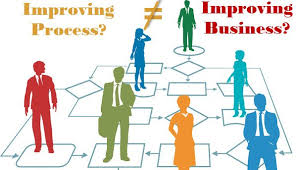
Nowadays, some companies implement Process Re-engineering to attain quick savings and achieve the short term profits they have always wanted to make. Thinking good about this progress, they go to another ambition only to find that soon they are confronted with many of the same difficulties they believed they had cleared up. Now they are challenged with re-engaging the staff, incurring additional costs, to fix issues that may directly have been identified and dealt with without the loss of customer satisfaction had they originally planned for continuous growth.

Business Process Re-engineering simplified

Business Process Re-engineering (BPR) is a complete process demanding a change in the primary way business processes are done. BPR recognizes unnecessary or repetitive activities and reduces them. Wherever feasible, it takes standard procedures and automates them. To achieve, it needs you to have a thoroughgoing and complete agreement of existing processes. Using this in-depth information allows for an examination of how well to make each piece of the method more efficiently, while always focusing on customer comfort.

What is needed to succeed?

To achieve BPR, traditional thinking and management functions must give way to empowered leadership and think “outside the box.” The exchange of information at all levels throughout the organization is essential. It begins with implementing goals and objectives for each process, defining roles and detailing shared strategies. This step is necessary to the success of a BPR action. Management must discharge departmental mandates, spare the work from the departmental accounts and remove strict operational control. These are anti-productive to BPR initiatives.

The next step is empowerment, allowing employees to have a say on how the business will work efficiently. To make sure that this happens, senior management must agree to commit to several things. The most important commitment: providing and supporting the impetus for the initiative. Once started, they can’t look back, this will likely be the most difficult obstacle management will encounter. Employees must see and understand that management supports employee participation and agree changes must be made. Management can’t disregard suggestions; even those they feel are frivolous and must provide positive feedback to encourage continued participation and success.

Next, management should realize that there will be time commitments involved both for themselves and for the staff. They must be willing to share some of their time with the staff doing the process investigation and mapping, for not only are the daily functions of the business examined and mapped but the management services as well. If there is a commitment to enhancing the overall functionality of the business, then no area can be left unmapped.

Many tasks are involved in Business Change. The first step towards success is planning and empowerment. The balance of tasks involved in a successful BPR implementation requires a fair amount of strategic thought and planning. Positive attitude, process thinking, avoiding the temptation of quick savings by eliminating staff, and being concentrated and on task, are the heart of the process and can be difficult. Remember, these are essential qualities in a productive transformation of the company.

Business – Quality Management Evaluation: Validate the work

Most successful companies these days are using some quality management system. This is not only a traditional method but one that is entirely justified and shown to be effective in the performance of the company’s goals; in particular on the business side.

A quality management system has been found to be highly beneficial for any business. This system helps the company make certain that all the ideas are taken sincerely and served meticulously for a more dynamic process that touches goals. It additionally works to reduce the volume of waste besides the way.

The system aids in keeping customer satisfaction in the long run. This is because nothing beats the good quality and high standards when it comes to making the customer happy enough to get back to an extra round. More so, happy customers are continuing to support the business to other characters within their political networks.

There are some options when it arrives at business quality support systems. Starting with one does not mandatorily have to be complicated. The only information necessary is a clearly established goal and a belief of the processes that make up the complete business. It does not end there. An evaluation of the operation should be carried after it is implemented to make sure it works and can do what it is deemed to do – guarantee the products and services delivered are of the highest quality all the time.

A good way to evaluate the effectivity of a quality management scheme is to have an independent audit. It involves an orderly and fair check of the various procedures in the industry. It assesses how the methods are using and profiting from the system. The statement should reflect every single person in the corporate ladder to ensure that all phases of the development profit from the policy.

Staff from within the organization can and should accompany the audit themselves. These internal auditors should maintain complete objectiveness in doing the assessment. Furthermore, they should keep the focus, which is to improve the procedures and not to find fault with their co-workers.

Consumers could also be obligatory auditors. This is a fair thing to do because they are not associated with the company and are more objective in recording observations and assessing the business methods and the entire quality management system being used. In addition to that, the customers are going to end up impressed with and appreciative of the company’s desire to be better.

Another good idea for an audit is to hire a consultant to conduct an entirely biased evaluation. Probably the only downside is the cost of paying for this professional. However, one can be sure about the quality of work done. It pays to have someone who is highly knowledgeable and trained in this particular process.

Cengrow is among the leaders in Management Consultants. They have a dedicated team of experts who understand the complexities and challenges of your Business performance management. The team then customizes solutions to meet the specific needs of your business.

How to Use Psychometric Testing in Hiring

According to a survey conducted by the Society for Human Resource Management, approximately 18% of the companies these days are using personality tests in the recruitment procedure, and surprisingly, this number is growing at the rate of 10-15% on an annual basis- as per many industrial and organizational psychologists and the Association of Test Publishers.

Psychometric testing proves that there are certain cognitive and personality tests which help the new employees to succeed in their field and boost them for their future. Since the cost of a bad hire is extensively estimated to be a year’s salary; there are huge incentives for organizations to get hiring right. Due to lack of knowledge, unfortunately, many organizations use the wrong psychometric assessments in a wrong way and here are the followings they ought to know to minimize the potential risks and maximize their predictive accuracy, as Cengrows is helping you to achieve:

  • Know the law: the organization ought to keep in mind, the legal compliance when they want to add psychometric tests to their pre-employment screening system. The assessment tools, especially cognitive ability tests need to be job- relevant due to the presence of anti- discrimination laws. Competency mapping is included too for psychomotor testing.
  • Business needs should be known: these tests won’t help you unless you don’t have well- established measures of job performance. These days, organizations are focusing more on the predictors or independent variables rather than concentrating on dependent variables. It is important to know that if an industry doesn’t have quantitative measures of employee performance on the job, then there is no source for statistical correlations of how good these tests predict their performance. In such a case, you need to be dependent on the assessment center.
  • Risk of cheating is reduced: the tests like cognitive ability tests are conducted in order to safeguard the candidate; organizations should ‘proctor’ the assessment test, either by monitoring him via video conference, or noting their activities directly. But keep in mind that some candidates may be tempted to play a smart act with the result. You must compare the reference of the candidate and his interview ratings with their results to ensure whether the two are consistent or not. Such things are useful in the sales department where to need to have a smart candidate and you can be easily fooled by people by ‘impression management’. Using multiple psychometric tests can actually help the organizations to get a more consistent picture. You have to perform such tests in limit and never try to over-do it because sometimes, even a well-developed, predictive assessment battery and legally defensible won’t be of any worth if the candidate feels it being over time-consuming.
  • Must share the results with the candidates: every candidate has the right to see their effect these days- as per “informed consent” and few organizations also provide access to the reports based on the psychometric tests that the applicants take. Whether the candidate accepts the employment offer or not, there are both- the ethical as well as the pragmatic benefits of sharing the result.
  • Test the tests: job performance of an individual must be evaluated quantitatively, which give the company criteria for correctness. While hiring managers and HR, one must consume the right methodology to select and retain the authentic psychometric tests.

To undergo all these points as mentioned earlier, one ought to know and understand the business needs and make sure that you find a test that evaluates the characteristics. Some laws prohibit the company from discriminating the privacy of the candidate, but no legislation prohibits the company from using strange assessment tools.

To know more visit: Cengrow

Competency Mapping: Importance for Employee Selection

we-give-you-success-stories-cengrow

Competency Mapping is a process that helps identify key competencies for a particular position in an organisation or for using it for training, recruitment, performance management and succession planning. It is a behavioural trait and not a skill or an ability that defines an individual’s competencies that make him meet the job demands within the parameters put by the organisation.

High in Demand

Competency Mapping is not a new concept, but in recent years it has been in high demand and many organizations use competency models as a basis for their performance management systems. Today, the organisations and businesses have understood its importance for employee selection as a process.

Encompassing professional, personal and technical competencies, competency mapping is highly flexible and can be customised as per the client’s needs. Moreover, it can even be built upon an already existing competency map of an organisation.

Benefits of Competency Mapping

The benefit of competency mapping is that it creates standards for employee training and development specifically tailored to your organizational needs.

It is a quick and efficient method that focussed and analyses how employees work and usually takes 1 or 2 days time period.

Creating a competency map helps to drills down to the skills, knowledge, abilities, and behaviours required for each unit of work. This approach makes the competency map a very useful and practical tool for organizations.

Another benefit is that it creates a comprehensive list of specific skills required to be performed on a job. This forms the basis of a competency assessment that focuses on how an employee performs at work in relation to the specified performance standards. In fact a competency mapping also provides ongoing employee performance coaching in lieu with the assessed employee’s acceptance. This not only benchmarks employee performance but also helps organisations target performance deficits and highlights skills that require additional trainings or specialised courses. Furthermore, it avoids the pitfalls of cumbersome documentation and complicated methods that often result in generic competency statements.

A competency model can be used for selection, placement, redeployment, performance management and evaluation, planning training & development, career role mapping and separation. Competency models are also useful as they not only communicate what is important to an organization but also provide a stable foundation for developing integrated human resource systems such as staffing, training, promotion, succession planning and performance management.

Should you be interested to use competency mapping, you should get assistance from experienced management and business consulting firm like Cengrow. With more than 30 years of expertise in management consulting globally, Cengrow provides end-to-end solutions for all your business challenges and adds value to your organisation’s performance, people and process. They help organizations identify key competencies and define associated critical behaviours that are linked to their strategic objectives and key success factors of their business.